Orthodoxy and Truth
by Dr Mario Baghos
Lecturer in Patristics and Church History at St Andrew’s Greek Orthodox Theological College
Lecturer in Patristics and Church History at St Andrew’s Greek Orthodox Theological College
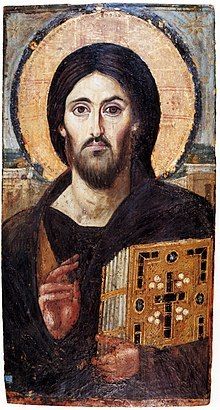
The Orthodox Church is the holy body of Christ (1 Corinthians 12:27), of the heavenly kingdom. It is not just a mirror reflection of that kingdom. The kingdom of God is not so distant from the Church on earth—the Church triumphant not so foreign to the Church militant—that they are only tentatively related. The Orthodox Church is the body of Christ precisely because there is a correspondence between what occurs in the heavenly places and what takes places in the liturgy and other sacred services in our local parishes; in our local congregations that mystically make up Christ’s sacred body.
The Orthodox Church therefore participates in the Truth concerning who God is. And that Truth is a Person, the second person of the Holy Trinity, our Lord Jesus Christ, who said concerning Himself: “I am the way, the truth, and the life. No one comes to the Father except through me” (John 14:6). In our increasingly relativistic society, some might feel uncomfortable with these words, and might ask themselves: ‘Does the Orthodox Church have a monopoly on Truth?’ or ‘can Truth not be found outside of the Church?’
Since Truth is a person, the Son of God and Godman Jesus Christ, and since that person transcends time and space together with God the Father and Holy Spirit, then Truth cannot be circumscribed or limited by anything or anyone. It is this Truth who created the universe and all human beings in His Image and Likeness (Genesis 1:26), who as God the Logos before His incarnation planted seeds of Himself in the rational faculty[1]—and in the hearts[2]—of all human persons, to lead them to Him. (Some Greek philosophers and many of the Hebrew prophets, even reached Him by His grace.)[3] It is for this reason that many saints of the Church insisted on apophaticism in terms of what we can say about God, for He totally transcends our understanding, and when the saints experience Him even their best analogies fall short of describing what they have seen or heard.[4]
Yet despite the apophaticism rendered duly to this mysterious and transcendent God, the same God is nevertheless paradoxically immanent. He transcends all things and yet is within all things. More than that: His Son was sent to us, or rather came down to us, to become one of us as our Lord Jesus Christ, and to establish the Orthodox Church as His mystical body on earth for our salvation. And while we do not preclude that God can and does inspire people even outside of the Church’s sacred precincts (for the whole cosmos is His, and all persons are made in His Image), nevertheless within the Church we have this inspiration and participation in Him—which intensifies according to the degree of one’s assimilation to Christ by God’s grace—as a guarantee. In the Orthodox Church, the Son reveals to us who God is—and while the Trinitarian God ultimately transcends the ‘words’ we use to describe the three divine persons who are united in essence as one God—nevertheless, Christ referred to Himself as ‘Son,’ and to His ‘Father’ and to the ‘Spirit,’ revealing these terms as applicable to God in a sacred and permanent manner, which is why we begin all of our prayers in this name. When the Godman, our Lord Jesus Christ, defeated death in our behalf when He rose from the dead, He initiated mortal beings into the life of this Trinitarian God, by grace and not by nature; and He did this precisely in His sacred body, the Orthodox Church. The Orthodox Church therefore intimately participates in the Truth, and can therefore be said to be True, since its members belong to the One who is Truth Himself, our Lord Jesus Christ. Admittedly, the perception of this Truth grows according to one’s closeness to Christ in the Church, e.g. I do not experience this Truth in the same way that the saints experience it, but that does not mean that it is not there. And we are all called, by God’s grace, to experience it, to experience Christ the way that the saints do.
Thus, while Truth is a transcendent person (or rather, three divine persons united in essence, the one God) who created the universe and human beings, the Orthodox Church is the special repository of this Truth, where Truth has been revealed and actualised in the members of the Church, who participate in Truth, in Christ, when, for example, we are baptised and chrismated—when we ‘put on Christ’ (Galatians 3:27) and are sealed with the Holy Spirit— and when we partake of Christ’s body and blood in the Eucharist. Through these and other sacraments (or mysteries)—marriage, ordination, unction—and the prayers directed to Christ and asceticism and good works undertaken in imitation of Him, we are led by Him to the kingdom, both in the Church on earth, and in heaven, where the kingdom exists for ever and ever. The proof of all of these things can be discerned in the lives of those persons whose struggle against the temptations, passions and sins—whose love for others is perfected more and more by the grace of God in the Church—and who become, by God’s grace, saints in this life. These persons are offered glimpses of that future kingdom in the here and now, communicating with saints who have long reposed, with God’s holy mother, the Theotokos and Ever-Virgin Mary, and even with the Lord Himself. By God’s grace, these saints are made existentially compatible with Christ: this is why they see Him and others who dwell in that kingdom; a kingdom that can only be entered by those who have become Christlike, gods with small ‘g’ or christs with a small ‘c.’
The Orthodox Church both is that kingdom and facilitates participation in that kingdom, and we know this because of the saints whom we venerate. And we are all called to become like them by God’s grace, no matter how much we fall short of this sacred calling. This calling is in fact a divine imperative—a mandate (Psalm 81(82):6, Matthew 5:48)—but it is constantly frustrated both by our own shortcomings and by the activity of the devil, conquered by Christ with His resurrection yet permitted to tempt us so that we—ever stubborn in our own self-will—might realise our selfishness and pride and repent; thereby returning to Christ’s love in humility, love and selflessness (in other words, in imitation of Him). These temptations can afflict us at any time, but they can be especially virulent when we are at prayer, even at church. For example: how often have we heard our brothers and sisters complain in church about the chanting—either its length or language—or about the elderly who, ostensibly, at one moment cross themselves and the next gossip about others? Sadly, people do not realise that such criticisms are hypocritical, because, even if some church-goers do in fact judge others (and many of us are guilty of this, to our shame), when we judge the ‘judgers’ we are guilty of exactly the same thing; and we do this in the house of the One who alone is judge, our Lord Jesus Christ (Romans 12:19).
Just as problematic for us is that such thoughts—such temptations—disrupt us from prayer, which is what we should be doing when we are in church, and they are incredibly deceptive, creating a false impression out of what really takes place during the divine services. For despite our human frailties, weaknesses, and sins (and concerning the latter, only our own sins should concern us), the Church remains the body of Christ on earth. Its hierarchs and priests are God’s appointed ministers through apostolic succession. Its chanters are singing hymns, written by saints, that we are all called to participate in together, as one family. The beautiful icons that adorn the walls have more than just an aesthetic purpose (although this is also important): they authentically depict and mystically participate in the persons depicted in them, so that veneration given to these icons is by God’s grace transferred to the saint or to Christ Himself. One can go on: the sweet-smelling incense represents our prayers rising to heaven; the respective feast days regarding persons and events of sacred history are dramatised so that our loving God, who transcends all times and spaces, might transport us to these events by His grace, thereby making us participants in the stories of the saints which are modelled—in reality and not figuratively—on the story of Christ Himself. Finally, the sacred gestures and movements of the liturgy are also a sacred narrative, culminating in the mystical supper of our Lord Jesus Christ with His disciples when he established the New Covenant with us in the Church, a participation in His sacred body and blood, for our salvation.
One can go on. But I conclude with the reflection and exhortation that since our Lord Jesus Christ is the Truth, and the Church is His sacred body, then the Orthodox Church discloses to each and every one of its faithful this Truth throughout the generations. This is a message that we the faithful all need to be reminded of from time to time; and it is a message that should be urgently communicated to the Church’s children who may have wandered from the path, and to this world which, until the day of the Lord (1 Thessalonians 5:2), is constantly in travail.
[Originally published on the website of the Holy Monastery of St George, Yellow Rock, 27/11/19. It can be read online at: https://www.stgeorgeyellowrock.org/articles]
[1] St Justin Martyr, The First Apology 44 in The First and Second Apologies, trans. Leslie William Barnard (New York: Paulist Press, 1997) 53-54.
[2] Epistle to Diognetus 7 in The Apostolic Fathers, trans. Bart D. Ehrman (Cambridge, MA: Harvard University Press, 2005) 144-45.
[3] We know that this is the case in relation to the Hebrew prophets like Isaiah and Daniel since they are venerated as saints in the Orthodox Church. For Greek philosophers such as Socrates and Heraclitus as inspired by the God the Logos we rely on the disposition of saints like Justin Martyr, see The First Apology 46 (Barnard 55).
[4] Apophaticism as a way of theologising facilitates a frame of mind that does not impose rational concepts or images upon the inexhaustible mystery of God, which is ultimately beyond human comprehension. But this should not be understood at the expense of kataphaticism, the converse of apophaticism, which consists of positive terms, concepts, and images that have indeed been revealed to us by God and express certain truths about Him.
The Orthodox Church therefore participates in the Truth concerning who God is. And that Truth is a Person, the second person of the Holy Trinity, our Lord Jesus Christ, who said concerning Himself: “I am the way, the truth, and the life. No one comes to the Father except through me” (John 14:6). In our increasingly relativistic society, some might feel uncomfortable with these words, and might ask themselves: ‘Does the Orthodox Church have a monopoly on Truth?’ or ‘can Truth not be found outside of the Church?’
Since Truth is a person, the Son of God and Godman Jesus Christ, and since that person transcends time and space together with God the Father and Holy Spirit, then Truth cannot be circumscribed or limited by anything or anyone. It is this Truth who created the universe and all human beings in His Image and Likeness (Genesis 1:26), who as God the Logos before His incarnation planted seeds of Himself in the rational faculty[1]—and in the hearts[2]—of all human persons, to lead them to Him. (Some Greek philosophers and many of the Hebrew prophets, even reached Him by His grace.)[3] It is for this reason that many saints of the Church insisted on apophaticism in terms of what we can say about God, for He totally transcends our understanding, and when the saints experience Him even their best analogies fall short of describing what they have seen or heard.[4]
Yet despite the apophaticism rendered duly to this mysterious and transcendent God, the same God is nevertheless paradoxically immanent. He transcends all things and yet is within all things. More than that: His Son was sent to us, or rather came down to us, to become one of us as our Lord Jesus Christ, and to establish the Orthodox Church as His mystical body on earth for our salvation. And while we do not preclude that God can and does inspire people even outside of the Church’s sacred precincts (for the whole cosmos is His, and all persons are made in His Image), nevertheless within the Church we have this inspiration and participation in Him—which intensifies according to the degree of one’s assimilation to Christ by God’s grace—as a guarantee. In the Orthodox Church, the Son reveals to us who God is—and while the Trinitarian God ultimately transcends the ‘words’ we use to describe the three divine persons who are united in essence as one God—nevertheless, Christ referred to Himself as ‘Son,’ and to His ‘Father’ and to the ‘Spirit,’ revealing these terms as applicable to God in a sacred and permanent manner, which is why we begin all of our prayers in this name. When the Godman, our Lord Jesus Christ, defeated death in our behalf when He rose from the dead, He initiated mortal beings into the life of this Trinitarian God, by grace and not by nature; and He did this precisely in His sacred body, the Orthodox Church. The Orthodox Church therefore intimately participates in the Truth, and can therefore be said to be True, since its members belong to the One who is Truth Himself, our Lord Jesus Christ. Admittedly, the perception of this Truth grows according to one’s closeness to Christ in the Church, e.g. I do not experience this Truth in the same way that the saints experience it, but that does not mean that it is not there. And we are all called, by God’s grace, to experience it, to experience Christ the way that the saints do.
Thus, while Truth is a transcendent person (or rather, three divine persons united in essence, the one God) who created the universe and human beings, the Orthodox Church is the special repository of this Truth, where Truth has been revealed and actualised in the members of the Church, who participate in Truth, in Christ, when, for example, we are baptised and chrismated—when we ‘put on Christ’ (Galatians 3:27) and are sealed with the Holy Spirit— and when we partake of Christ’s body and blood in the Eucharist. Through these and other sacraments (or mysteries)—marriage, ordination, unction—and the prayers directed to Christ and asceticism and good works undertaken in imitation of Him, we are led by Him to the kingdom, both in the Church on earth, and in heaven, where the kingdom exists for ever and ever. The proof of all of these things can be discerned in the lives of those persons whose struggle against the temptations, passions and sins—whose love for others is perfected more and more by the grace of God in the Church—and who become, by God’s grace, saints in this life. These persons are offered glimpses of that future kingdom in the here and now, communicating with saints who have long reposed, with God’s holy mother, the Theotokos and Ever-Virgin Mary, and even with the Lord Himself. By God’s grace, these saints are made existentially compatible with Christ: this is why they see Him and others who dwell in that kingdom; a kingdom that can only be entered by those who have become Christlike, gods with small ‘g’ or christs with a small ‘c.’
The Orthodox Church both is that kingdom and facilitates participation in that kingdom, and we know this because of the saints whom we venerate. And we are all called to become like them by God’s grace, no matter how much we fall short of this sacred calling. This calling is in fact a divine imperative—a mandate (Psalm 81(82):6, Matthew 5:48)—but it is constantly frustrated both by our own shortcomings and by the activity of the devil, conquered by Christ with His resurrection yet permitted to tempt us so that we—ever stubborn in our own self-will—might realise our selfishness and pride and repent; thereby returning to Christ’s love in humility, love and selflessness (in other words, in imitation of Him). These temptations can afflict us at any time, but they can be especially virulent when we are at prayer, even at church. For example: how often have we heard our brothers and sisters complain in church about the chanting—either its length or language—or about the elderly who, ostensibly, at one moment cross themselves and the next gossip about others? Sadly, people do not realise that such criticisms are hypocritical, because, even if some church-goers do in fact judge others (and many of us are guilty of this, to our shame), when we judge the ‘judgers’ we are guilty of exactly the same thing; and we do this in the house of the One who alone is judge, our Lord Jesus Christ (Romans 12:19).
Just as problematic for us is that such thoughts—such temptations—disrupt us from prayer, which is what we should be doing when we are in church, and they are incredibly deceptive, creating a false impression out of what really takes place during the divine services. For despite our human frailties, weaknesses, and sins (and concerning the latter, only our own sins should concern us), the Church remains the body of Christ on earth. Its hierarchs and priests are God’s appointed ministers through apostolic succession. Its chanters are singing hymns, written by saints, that we are all called to participate in together, as one family. The beautiful icons that adorn the walls have more than just an aesthetic purpose (although this is also important): they authentically depict and mystically participate in the persons depicted in them, so that veneration given to these icons is by God’s grace transferred to the saint or to Christ Himself. One can go on: the sweet-smelling incense represents our prayers rising to heaven; the respective feast days regarding persons and events of sacred history are dramatised so that our loving God, who transcends all times and spaces, might transport us to these events by His grace, thereby making us participants in the stories of the saints which are modelled—in reality and not figuratively—on the story of Christ Himself. Finally, the sacred gestures and movements of the liturgy are also a sacred narrative, culminating in the mystical supper of our Lord Jesus Christ with His disciples when he established the New Covenant with us in the Church, a participation in His sacred body and blood, for our salvation.
One can go on. But I conclude with the reflection and exhortation that since our Lord Jesus Christ is the Truth, and the Church is His sacred body, then the Orthodox Church discloses to each and every one of its faithful this Truth throughout the generations. This is a message that we the faithful all need to be reminded of from time to time; and it is a message that should be urgently communicated to the Church’s children who may have wandered from the path, and to this world which, until the day of the Lord (1 Thessalonians 5:2), is constantly in travail.
[Originally published on the website of the Holy Monastery of St George, Yellow Rock, 27/11/19. It can be read online at: https://www.stgeorgeyellowrock.org/articles]
[1] St Justin Martyr, The First Apology 44 in The First and Second Apologies, trans. Leslie William Barnard (New York: Paulist Press, 1997) 53-54.
[2] Epistle to Diognetus 7 in The Apostolic Fathers, trans. Bart D. Ehrman (Cambridge, MA: Harvard University Press, 2005) 144-45.
[3] We know that this is the case in relation to the Hebrew prophets like Isaiah and Daniel since they are venerated as saints in the Orthodox Church. For Greek philosophers such as Socrates and Heraclitus as inspired by the God the Logos we rely on the disposition of saints like Justin Martyr, see The First Apology 46 (Barnard 55).
[4] Apophaticism as a way of theologising facilitates a frame of mind that does not impose rational concepts or images upon the inexhaustible mystery of God, which is ultimately beyond human comprehension. But this should not be understood at the expense of kataphaticism, the converse of apophaticism, which consists of positive terms, concepts, and images that have indeed been revealed to us by God and express certain truths about Him.