"give from the heart since each person is the very icon of God incarnate in the world."
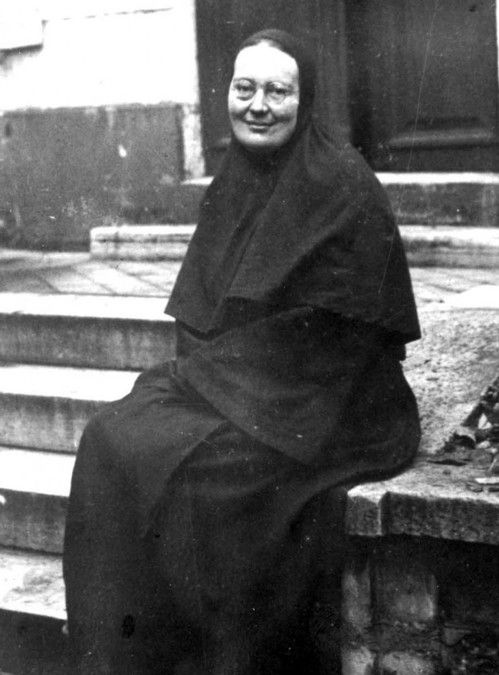
Born in 1891 in
Riga, Latvia to devout parents, Elizaveta Pilenko (as she was
originally known) lived what many would consider a turbulent
life. She left the faith as a young child after the death of her father,
was involved in Russian politics during the communist regime,
and went through multiple marriages. This, however, all changed
with the death of her daughter, an event which completely
changed Elizaveta’s outlook on life. She returned to the faith and
moved to Paris in 1923, becoming a nun in 1932 and given the
name Maria. But rather than remaining in a monastery, she
opened a house of hospitality for those in need irrespective of
their ethnicity or religion.
With the onset of World War Two, Mother Maria redoubled her efforts to care for those affected by the war. She was able to smuggle many Jewish children imprisoned in the Velodrome d’Hiver to safety by hiding them in garbage bins. However, this eventually led to Mother Maria making the ultimate sacrifice. In 1943, she was arrested by the Gestapo and taken to the Ravensbruck concentration camp. On Good Friday of 1945, Mother Maria took the place of a fellow prisoner in the gas chambers, thereby gaining the crown of martyrdom. She was canonised by the Ecumenical Patriarchate on January 18, 2004.
Her life is a true testament to the individual and specific plan that Christ has for each and every one of us, no matter how turbulent our pasts may be. May God bless us to experience and also show the love Mother Maria had for all those she cared for, a love that was “to the end and without exceptionâ€.
With the onset of World War Two, Mother Maria redoubled her efforts to care for those affected by the war. She was able to smuggle many Jewish children imprisoned in the Velodrome d’Hiver to safety by hiding them in garbage bins. However, this eventually led to Mother Maria making the ultimate sacrifice. In 1943, she was arrested by the Gestapo and taken to the Ravensbruck concentration camp. On Good Friday of 1945, Mother Maria took the place of a fellow prisoner in the gas chambers, thereby gaining the crown of martyrdom. She was canonised by the Ecumenical Patriarchate on January 18, 2004.
Her life is a true testament to the individual and specific plan that Christ has for each and every one of us, no matter how turbulent our pasts may be. May God bless us to experience and also show the love Mother Maria had for all those she cared for, a love that was “to the end and without exceptionâ€.