The Nicene Creed
Statement, Summary and Standard of Faith
Part TWO
by Dr Philip Kariatlis
Sub-Dean and Associate Professor of Theology at St Andrew's Theological College
Sub-Dean and Associate Professor of Theology at St Andrew's Theological College
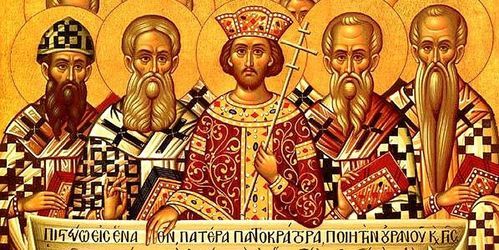
In the previous article, we briefly looked at the significance of the Creed for us today and brought to light that in the early Church it was considered to be a statement, summary and standard of the faith. In the following two articles we will begin to look at some of the most important truths outlined in the Creed.
The Structure and Basic Teachings of the Creed
The Creed is made up of twelve articles of faith, seven of which relate to God the Father, his only-begotten Son, the ‘one Lord Jesus Christ’ and the Son’s relationship with the world. These articles were first promulgated at the First Ecumenical Council (325AD) in Nicaea. The remaining five, relating to the Holy Spirit – more precisely, the Holy Spirit’s divinity and unique relationship to the Father – the Church and God’s future kingdom, were proclaimed at the Second Ecumenical Council (381AD) in the city of Constantinople.
God the Father almighty
The Creed begins with a confession of faith in God the Father. From this it is clear that the Christian understanding of God is totally unrelated to any philosophical understanding which usually presents God as some abstract concept, the Uncaused Cause of the Greek philosophers. The Christian God, on the other hand, is Father! He is Father because He eternally begets a Son and timelessly issues forth the Holy Spirit. In referring to God as Father, the Eastern Orthodox tradition claims that He is the sole principle (μόνη ἄρχη) of the Son’s timeless generation and the Holy Spirit’s procession. More than this, the fact that God is Father also implies that we are his children. Reference to God as the ‘almighty’ Father highlights that evil will not prevail in the end; that, on the contrary God’s unimaginable love for the world will ultimately be victorious, thus giving us, the faithful, hope beyond the challenges, difficulties and evil that often seems to have the upper hand.
Furthermore, God is presented as Creator of both the visible and heavenly realms. This was added because there were many Christian sects in the early Church, such as the Gnostics for example, who believed that God could not have possibly been responsible for creating the world. In stating that God is Creator of ‘heaven and earth’, the Creed is declaring that God is responsible for brining the entire created realm – both earthly and heavenly – into existence and as such highlighting its inherent goodness. Precisely because God is the Creator of the entire world, the world is sacred insofar as it reveals the glory of God (cf. Psalm 19:1). As such, far from exploiting the world and depleting its resources, human persons are charged with the responsibility of being faithful stewards of the world, caring and looking after it.
The Only-Begotten Son of God
Next, the Creed turns its attention to the ‘only begotten Son of God’. In light of the fact that the Christian God is the ‘Father almighty’, this necessarily implies that He has a Son because one cannot be called ‘Father’ without a Son. In this way, the logical sequence and relation between the articles of faith dealing with the Father and those following, namely the Creed’s presentation of the Son respectively become apparent. More specifically, those tenets of the faith relating to Jesus Christ, “the only-begotten Son of God” can be divided into two: whilst the first specifically relate to Christ’s unique relationship to his heavenly Father – what could possibly be called ‘ontological Christology’ (namely, the very being of the Son being precisely the same as the Father’s) – the second relate to Jesus’ relation to the world – what could be referred to as ‘functional Christology’. Notwithstanding the technical names ascribed to these two Christological sections of the Creed, it is important to appreciate what is being said.
The two most important phrases, which make explicit Jesus Christ’s unique relationship to the Father are the terms ‘of one essence [ὁμοούσιον]’ and ‘begotten [γεννηθέντα]’. In referring to Jesus Christ as being ‘of one essence with the Father’ the Creed is basically affirming the full and absolute deity of Jesus Christ and his co-eternity with the Father. In this way, the Creed is underscoring that all properties and activities proper to God the Father can equally be attributed to the Son of God as well. Accordingly, if God the Father is to contemplated as ‘light’, then the same can be said of Jesus Christ; if God the Father is ‘true God’, so is Jesus Christ. This is the meaning of the phrase, “light from light, true God from true God” that we find in the Creed. To say this another way, the term homoousios underscores the fact that Jesus Christ cannot in any way be considered to be radically different form the Father. In other words, it highlights the fact that the Son of God possesses essentially the very same divinity as that of God the Father. In this way, the term affirms that the Son of God is unlike any created reality; namely, Jesus is not to be thought of as an offspring or a creature of God – as indeed some were asserting during that time when the Creed was first written and continue to do so today! The other important term, ‘begotten’ gives prominence to the fact that not only is the Son of God of the very same essence as God his Father, but that He is also a distinct divine ‘hypostasis’ or person – indeed, the second divine Person of the Holy Trinity, yet one in permanent communion/koinonia with his Father – and of course the Holy Spirit. In referring to the Son of God as ‘begotten’ the Creed identifies that which is unique with regards to the Son of God. Indeed, the Father is the unbegotten One and the Holy Spirit is the One who proceeds eternally from the Father. In this way, both the indissoluble communion and the unity of the Father with the Son together with his distinctiveness is highlighted in the Creed.
After having specified the Son’s unique relationship to God the Father, the Creed continues in identifying his activity within the world. The Creed captures the entire activity of Christ on earth – namely, his incarnation, together with his crucifixion, resurrection, ascension and return in glory (often referred to in text books in terms of ‘Christ’s entire salvific economy) – and provides us with the hermeneutical key to unlocking the significance of these activities as a whole and appreciating their relationship. This section of the Creed begins with “for us and for our salvation” thereby clearly highlighting that all these events can only truly be understood when seen in light of our salvation. In this way, the Creed is clearly concerned with presenting a truly comprehensive or unified treatment of soteriology (the technical term given in systematic theology for the Church’s doctrine of salvation) where all the events of Christ’s life are presented as integral aspects of salvation. Unlike modern approaches in theology which have tended to isolate one event – usually Christ’s atoning death on the Cross – for salvation, the Creed clearly presents with clarity and potency a more holistic and inclusive vision of salvation connecting and identifying the mutual relationship of Christ’s entire salvific economy. Accordingly, salvation is not merely achieved through Christ’s sacrifice on the Cross, but includes his entire life, namely his incarnation, culminating in his resurrection and return in the future.
It could be said, even though this is not explicitly stated, that reference to the unique relationship of Jesus Christ to his Father followed by his relationship with us, is a precursor to the Christological teaching of the Church proclaimed at Chalcedon in 451AD – a definitive Christological statement for the Eastern Orthodox tradition – which stated that we believe in Jesus Christ who is one Person in two natures, perfect God and perfect human being. The Creed states explicitly that the Son, who shares the very same essence as the Father, became incarnate in time and in this way acquired an integral human nature. Accordingly, Jesus Christ is known as one person in two natures without confusion and without separation. The key to understanding Christ, in Orthodox theology, is indeed to see him from within this theandric (namely divine-human) perspective. And so, for example, even Christ’s earthly ministry – which at first glance might be said to say something about Christ’s humanity – also highlights his divinity as well, since all these earthly ‘human’ events took place in order to save humanity and the world at large, something only possible by one who is divine with exactly the same divinity as God, his heavenly Father. Consequently, these human events have no other purpose than to reveal his true divinity.
The Structure and Basic Teachings of the Creed
The Creed is made up of twelve articles of faith, seven of which relate to God the Father, his only-begotten Son, the ‘one Lord Jesus Christ’ and the Son’s relationship with the world. These articles were first promulgated at the First Ecumenical Council (325AD) in Nicaea. The remaining five, relating to the Holy Spirit – more precisely, the Holy Spirit’s divinity and unique relationship to the Father – the Church and God’s future kingdom, were proclaimed at the Second Ecumenical Council (381AD) in the city of Constantinople.
God the Father almighty
The Creed begins with a confession of faith in God the Father. From this it is clear that the Christian understanding of God is totally unrelated to any philosophical understanding which usually presents God as some abstract concept, the Uncaused Cause of the Greek philosophers. The Christian God, on the other hand, is Father! He is Father because He eternally begets a Son and timelessly issues forth the Holy Spirit. In referring to God as Father, the Eastern Orthodox tradition claims that He is the sole principle (μόνη ἄρχη) of the Son’s timeless generation and the Holy Spirit’s procession. More than this, the fact that God is Father also implies that we are his children. Reference to God as the ‘almighty’ Father highlights that evil will not prevail in the end; that, on the contrary God’s unimaginable love for the world will ultimately be victorious, thus giving us, the faithful, hope beyond the challenges, difficulties and evil that often seems to have the upper hand.
Furthermore, God is presented as Creator of both the visible and heavenly realms. This was added because there were many Christian sects in the early Church, such as the Gnostics for example, who believed that God could not have possibly been responsible for creating the world. In stating that God is Creator of ‘heaven and earth’, the Creed is declaring that God is responsible for brining the entire created realm – both earthly and heavenly – into existence and as such highlighting its inherent goodness. Precisely because God is the Creator of the entire world, the world is sacred insofar as it reveals the glory of God (cf. Psalm 19:1). As such, far from exploiting the world and depleting its resources, human persons are charged with the responsibility of being faithful stewards of the world, caring and looking after it.
The Only-Begotten Son of God
Next, the Creed turns its attention to the ‘only begotten Son of God’. In light of the fact that the Christian God is the ‘Father almighty’, this necessarily implies that He has a Son because one cannot be called ‘Father’ without a Son. In this way, the logical sequence and relation between the articles of faith dealing with the Father and those following, namely the Creed’s presentation of the Son respectively become apparent. More specifically, those tenets of the faith relating to Jesus Christ, “the only-begotten Son of God” can be divided into two: whilst the first specifically relate to Christ’s unique relationship to his heavenly Father – what could possibly be called ‘ontological Christology’ (namely, the very being of the Son being precisely the same as the Father’s) – the second relate to Jesus’ relation to the world – what could be referred to as ‘functional Christology’. Notwithstanding the technical names ascribed to these two Christological sections of the Creed, it is important to appreciate what is being said.
The two most important phrases, which make explicit Jesus Christ’s unique relationship to the Father are the terms ‘of one essence [ὁμοούσιον]’ and ‘begotten [γεννηθέντα]’. In referring to Jesus Christ as being ‘of one essence with the Father’ the Creed is basically affirming the full and absolute deity of Jesus Christ and his co-eternity with the Father. In this way, the Creed is underscoring that all properties and activities proper to God the Father can equally be attributed to the Son of God as well. Accordingly, if God the Father is to contemplated as ‘light’, then the same can be said of Jesus Christ; if God the Father is ‘true God’, so is Jesus Christ. This is the meaning of the phrase, “light from light, true God from true God” that we find in the Creed. To say this another way, the term homoousios underscores the fact that Jesus Christ cannot in any way be considered to be radically different form the Father. In other words, it highlights the fact that the Son of God possesses essentially the very same divinity as that of God the Father. In this way, the term affirms that the Son of God is unlike any created reality; namely, Jesus is not to be thought of as an offspring or a creature of God – as indeed some were asserting during that time when the Creed was first written and continue to do so today! The other important term, ‘begotten’ gives prominence to the fact that not only is the Son of God of the very same essence as God his Father, but that He is also a distinct divine ‘hypostasis’ or person – indeed, the second divine Person of the Holy Trinity, yet one in permanent communion/koinonia with his Father – and of course the Holy Spirit. In referring to the Son of God as ‘begotten’ the Creed identifies that which is unique with regards to the Son of God. Indeed, the Father is the unbegotten One and the Holy Spirit is the One who proceeds eternally from the Father. In this way, both the indissoluble communion and the unity of the Father with the Son together with his distinctiveness is highlighted in the Creed.
After having specified the Son’s unique relationship to God the Father, the Creed continues in identifying his activity within the world. The Creed captures the entire activity of Christ on earth – namely, his incarnation, together with his crucifixion, resurrection, ascension and return in glory (often referred to in text books in terms of ‘Christ’s entire salvific economy) – and provides us with the hermeneutical key to unlocking the significance of these activities as a whole and appreciating their relationship. This section of the Creed begins with “for us and for our salvation” thereby clearly highlighting that all these events can only truly be understood when seen in light of our salvation. In this way, the Creed is clearly concerned with presenting a truly comprehensive or unified treatment of soteriology (the technical term given in systematic theology for the Church’s doctrine of salvation) where all the events of Christ’s life are presented as integral aspects of salvation. Unlike modern approaches in theology which have tended to isolate one event – usually Christ’s atoning death on the Cross – for salvation, the Creed clearly presents with clarity and potency a more holistic and inclusive vision of salvation connecting and identifying the mutual relationship of Christ’s entire salvific economy. Accordingly, salvation is not merely achieved through Christ’s sacrifice on the Cross, but includes his entire life, namely his incarnation, culminating in his resurrection and return in the future.
It could be said, even though this is not explicitly stated, that reference to the unique relationship of Jesus Christ to his Father followed by his relationship with us, is a precursor to the Christological teaching of the Church proclaimed at Chalcedon in 451AD – a definitive Christological statement for the Eastern Orthodox tradition – which stated that we believe in Jesus Christ who is one Person in two natures, perfect God and perfect human being. The Creed states explicitly that the Son, who shares the very same essence as the Father, became incarnate in time and in this way acquired an integral human nature. Accordingly, Jesus Christ is known as one person in two natures without confusion and without separation. The key to understanding Christ, in Orthodox theology, is indeed to see him from within this theandric (namely divine-human) perspective. And so, for example, even Christ’s earthly ministry – which at first glance might be said to say something about Christ’s humanity – also highlights his divinity as well, since all these earthly ‘human’ events took place in order to save humanity and the world at large, something only possible by one who is divine with exactly the same divinity as God, his heavenly Father. Consequently, these human events have no other purpose than to reveal his true divinity.