I AM THE LIFE
Part Seven
THE ‘I AMS’ OF JESUS
Series by Fr Gerasimos Koutsouras
St George Church, Rose Bay Sermons
Based on the book: The Great I Am’s of Jesus by Anthony Coniaris, Light and Life Pub. Co, 1969.
Sunday, 1st of April
THE ‘I AMS’ OF JESUS
Series by Fr Gerasimos Koutsouras
St George Church, Rose Bay Sermons
Based on the book: The Great I Am’s of Jesus by Anthony Coniaris, Light and Life Pub. Co, 1969.
Sunday, 1st of April
Many people who go on holidays and who manage to actually find rest and relaxation on a cool beach or at a crisp mountain retreat, may often say the phrase, “This is the life”. But life can be different things for different people. While for some, life can be all about pleasure and enjoyment, for others life can be one problem after another, for many others, life is simply a struggle for survival. For many people, life is pointless.
The pioneering entomologist, Jean Henri Fabre, once experimented with a species of caterpillar, the processionary caterpillar. He put leafy food in a pot and then placed many of these caterpillars around the rim of the pot so that the first caterpillar was following the last. The caterpillars followed each other for a week, until they dropped dead from exhaustion and starvation. Food and water were less than an inch away, but they never looked beyond the rim of the pot.
We can draw a parallel with us humans. Life can be one continuous circle from home to work until we drop from exhaustion. The pursuit of daily necessities, such as food and shelter is certainly necessary. But when this pursuit mutates into the pursuit of superfluous possessions and wealth, then life becomes one big empty cycle.
This gives the context for us to understand what our Lord Jesus Christ was meaning when he said, “For whoever wants to save their life will lose it, but whoever loses their life for me will save it.” (Luke 9:24) On the one hand there is the physical life and on the other there is the spiritual life. There is food for the stomach... then there is food for the soul. There is shelter above our heads... then there is the salvation of our souls. The physical is only temporary... the spiritual lasts forever. If we focus on the temporary, physical things... we lose the eternal things. If we focus on the eternal things... then we enrich and enhance the temporary things.

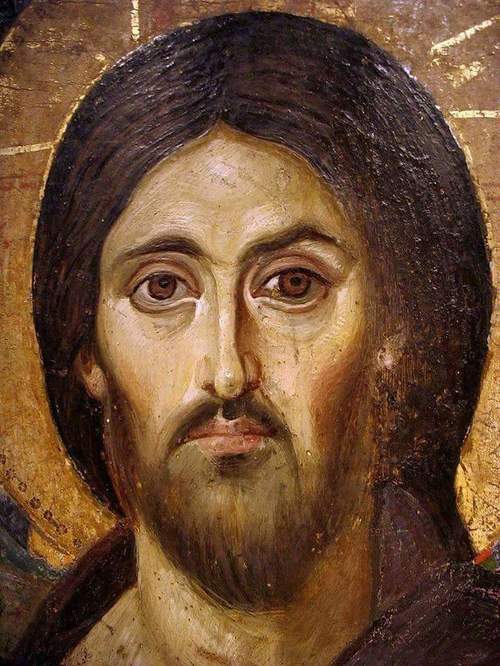
Jesus Christ said, “I am the Way, the Truth and the Life.” Communion with him is communion with real, true life. The idea of life, ‘zoe’, is prevalent in the teaching of Jesus. Listen to these quotes: “The words that I speak to you are spirit and life." (John 6:63); “I came that they may have life, and have it abundantly.” (John 10:10); “Whoever believes in the Son has eternal life; whoever does not listen to the Son shall not see life...” (John 3:36).
How true these words echo when we quote some atheists who, in rejecting God, reject life also. God is the essence of life. So you can either reject them both together or embrace them both together. Here are some quotes from some atheists. Clarence Darrow: “The outstanding fact that cannot be dodged by thoughtful men is the futility of it all.” Mencken: “Life fundamentally is not worth living... what could be more logical than suicide? What could be more preposterous than keeping alive?” Bertrand Russell called human life “a curious accident in a backwater.”
The famous Russian writer Leo Tolstoy, author of War and Peace and Anna Karenina, was born into wealth and nobility, he had everything. Yet he was still dissatisfied. He threw himself into the pursuit of pleasure. That just made things worse. He came to the point where life for him was not worth living any more. He was afraid he would commit suicide. But one day as he was walking in the woods he came across some peasants whose whole demeanour reflected a deep inner peace. He realized immediately that this inner peace had sprung from their faith in God. Tolstoy writes: “I walked deep into the woods that day and there gave my life to the Lord. Suddenly, the whole world came alive to me. All was new and different. I have come to the conclusion that God and real life are one and the same thing. To know God is to live. There is no life without him.”
The pioneering entomologist, Jean Henri Fabre, once experimented with a species of caterpillar, the processionary caterpillar. He put leafy food in a pot and then placed many of these caterpillars around the rim of the pot so that the first caterpillar was following the last. The caterpillars followed each other for a week, until they dropped dead from exhaustion and starvation. Food and water were less than an inch away, but they never looked beyond the rim of the pot.
We can draw a parallel with us humans. Life can be one continuous circle from home to work until we drop from exhaustion. The pursuit of daily necessities, such as food and shelter is certainly necessary. But when this pursuit mutates into the pursuit of superfluous possessions and wealth, then life becomes one big empty cycle.
This gives the context for us to understand what our Lord Jesus Christ was meaning when he said, “For whoever wants to save their life will lose it, but whoever loses their life for me will save it.” (Luke 9:24) On the one hand there is the physical life and on the other there is the spiritual life. There is food for the stomach... then there is food for the soul. There is shelter above our heads... then there is the salvation of our souls. The physical is only temporary... the spiritual lasts forever. If we focus on the temporary, physical things... we lose the eternal things. If we focus on the eternal things... then we enrich and enhance the temporary things.
Jesus Christ said, “I am the Way, the Truth and the Life.” Communion with him is communion with real, true life. The idea of life, ‘zoe’, is prevalent in the teaching of Jesus. Listen to these quotes: “The words that I speak to you are spirit and life." (John 6:63); “I came that they may have life, and have it abundantly.” (John 10:10); “Whoever believes in the Son has eternal life; whoever does not listen to the Son shall not see life...” (John 3:36).
How true these words echo when we quote some atheists who, in rejecting God, reject life also. God is the essence of life. So you can either reject them both together or embrace them both together. Here are some quotes from some atheists. Clarence Darrow: “The outstanding fact that cannot be dodged by thoughtful men is the futility of it all.” Mencken: “Life fundamentally is not worth living... what could be more logical than suicide? What could be more preposterous than keeping alive?” Bertrand Russell called human life “a curious accident in a backwater.”
The famous Russian writer Leo Tolstoy, author of War and Peace and Anna Karenina, was born into wealth and nobility, he had everything. Yet he was still dissatisfied. He threw himself into the pursuit of pleasure. That just made things worse. He came to the point where life for him was not worth living any more. He was afraid he would commit suicide. But one day as he was walking in the woods he came across some peasants whose whole demeanour reflected a deep inner peace. He realized immediately that this inner peace had sprung from their faith in God. Tolstoy writes: “I walked deep into the woods that day and there gave my life to the Lord. Suddenly, the whole world came alive to me. All was new and different. I have come to the conclusion that God and real life are one and the same thing. To know God is to live. There is no life without him.”

Painting of Tolstoy by Repin 1901
So it is with us. If the life of God is to become our life, we must be alive to Jesus, alive to the Church, alive to prayer, alive to worship, alive to the Christ who comes to us in the Sacraments, alive to the Christ who speaks to us personally through the Bible, alive to the needs of our fellow humans in whom Christ dwells.
It is very helpful that the Church Fathers define Life and Death as two poles of either communion or separation from the divine. St Maximos the Confessor, in the 600s, said: “Death in the true sense is separation from God... Life in the true sense, is he who said, ‘I am the Life’” (Second Century on Love, No. 93).

St Gregory Palamas, in the 1300s [whose memory we keep today, the 2nd Sunday of Lent], explains it more elaborately: “After our ancestors’ transgression in paradise through the tree, we suffered the death of our soul - which is the separation of the soul from God - prior to our bodily death; yet although we cast away our divine likeness, we did not lose our divine image. Thus when the soul renounces its attachment to inferior things and cleaves through love to God and submits itself to Him through acts and modes of virtue, it is illuminated and made beautiful by God and is raised to a higher level, obeying His counsels and exhortations; and by these means it regains the truly eternal life. Through this life it makes the body conjoined to it immortal, so that in due time the body attains the promised resurrection and participates in eternal glory.” 1
And finally St Anthony the Great, in the 300s said it in the most simplest way: “Die daily, that you may live eternally.”
Amen.
[1] St. Gregory Palamas, Topics of Natural and Theological Science No. 39, The Philokalia Vol. 4 edited by Palmer, Sherrard and Ware; Faber and Faber pg. 363