I AM THE TRUTH
Part Six
THE ‘I AMS’ OF JESUS
Series by Fr Gerasimos Koutsouras
St George Church, Rose Bay Sermons
Based on the book: The Great I Am’s of Jesus by Anthony Coniaris, Light and Life Pub. Co, 1969.
Sunday, 24th of March 2013
THE ‘I AMS’ OF JESUS
Series by Fr Gerasimos Koutsouras
St George Church, Rose Bay Sermons
Based on the book: The Great I Am’s of Jesus by Anthony Coniaris, Light and Life Pub. Co, 1969.
Sunday, 24th of March 2013
The logo of Harvard University has one big word on it in Latin, ‘veritas’, which means ‘truth’. That single word expresses the purpose of all education and science, the desire of all philosophy and research, the aim of all schools and colleges... to discover truth. A philosophy lecturer once asked “What could be better than seeking the truth?” A student quirked back “Um... finding it?”

Which brings us to the distinction between truth with a little ‘t’ and Truth with a big ‘T’. The little ‘t’ truths have to do with all the different the parts of the picture, the big ‘T’ Truth has to do with the whole picture. The little ‘t’ truths have to do with scientific facts and knowledge, the what? and how?, the big ‘T’ Truth has to do with the wisdom of the why? and who?. The little ‘t’ truths have to do with the seeking and the journey, the big ‘T’ Truth has to do with the finding and the destination.
One of the basic quests for all people in life is to find the truth. As children, some of us would take apart our toys to see how they worked. One of the first nagging questions we ask as children is “Why?” Why this, why that? But all the answers we got in our upbringing and schooling and education were answering the question of how? and what? That’s why we kept going with “why?”, “why?” “but, why?” So it is that all of us have learnt to answer the ‘why’s’ with the ‘how’s’. We continue to take apart everything with microscopes and telescopes. We analyse everything. We remain focused on the question of how? and what? The little ‘t’s.
That is why most of us learnt to ignore the bigger questions, the bigger ‘T’s. “Why am I here?”, “Who am I?” “Where am I going?” “What is my purpose in life?”. This explains why religion has not become extinct despite all the science and information and communication of the modern world. Monolithic Science chooses to side-step the big “why’s?” And by the same token, monolithic religion chooses to side-step the “how’s”.
As far as we are concerned, we Orthodox Christians who have inherited the Greek tradition, do not pit the two approaches against each other. It is not Science versus Religion, it is Science and Religion. One is interested in the little ‘t’s the other is interested in the big ‘T’. Respecting and engaging with both is the wise thing to do. It is when we choose one over the other that we become vicious and nasty. Atheists and amoralists on the one side and fundamentalists and fanatics on the other.
An example of a person whose quest for truth led him to the big ‘T’ was Justin the Philosopher. Born into a pagan family around 100AD, he grew up to study all the philosophies of the day, the Stoics, the Peripatetics, the Pythagoreans, the Platonists. In each of them he found bits of satisfaction, but not the inner satisfaction of the ultimate answer to life. One day, he met and had a discussion with a Christian. He was interested and began to read some of the Scriptures of the Christians. He would have read the passage where Jesus Christ said: “I am the Way, the Truth and the Life.” Here was someone saying he was the Truth. Someone, not something. A person. Not the “how?”, not the “what?” but a “who?”, a person. And person supposes relationship; and relationship supposes love; and love leads to communion with the divine; and communion with the divine is... the meaning and the purpose.

Justin, the philosopher embraced Christ and became a Christian. He went on to compose famous writings where he expounds on the biblical concept of Christ as Logos of God, as the Word of God, as the Logic of God. That non- Christians such as the ancient Greek philosophers have traces of ‘spermatikos logos’, seeds of the ultimate Logos, partial truth, fragments and insights into God, but that the fullness of the Truth is Christ.
Many modern intellectuals, tell us that the search for truth is an open-ended process with no possibility of ever really achieving it. No, Jesus Christ says something very different. That finding the truth is a possibility. He said: “And you shall know the truth, and the truth shall make you free.” (John 8:32) Yes, it was not a rock band or a modern intellectual who said this famous phrase..., it was Jesus Christ, two thousand years ago. “The truth shall make you free.” “Η αλήθεια ελευθερώσει υμάς.”

Now lets compare truth and falsehood. There is an old story in the odes of Horatio. It tells of two women that went swimming at a pond. One was called Veritas and the other was called Falsitatis. Truth and Falsehood. After swimming a little bit, Falsehood got out of the pond, grabbed the clothes of Truth and ran off, leaving behind her clothes. Truth got out of the water and preferred to go back home naked rather than appear in the the clothes of Falsehood. This is how the phrase “naked truth” originated. Truth refuses to present itself with lies, but falsehood never hesitates to disguise itself with bits of truth.

What are some of the disguises that falsehood wears in order to appear as truth?
Disguise number one: popular opinion... just because so many people hold an opinion, does not necessarily mean that it is right.
Disguise number two: fashion and fads... just because so many people do something, does not necessarily mean that it is right.
Disguise number three: legalism... just because the first two disguises may become scripted into law, does not necessarily mean that it is right.
These disguises are evident in the events leading up to the crucifixion of Jesus. When the governor Pontius Pilatus had to decide if he were to execute an innocent person, Jesus Christ, he knew that there was no crime. He asked Jesus, “Are you a king?” and after saying that his kingdom is not of this world, Jesus said, “You say correctly that I am a king. For this I have been born, and for this I have come into the world, to testify to the truth. Everyone who is of the truth hears my voice.” And the governor dismissively said “What is truth?”.
In other words, he didn’t care. Truth? Too hard. There is a mob out there wanting you dead (popular opinion); its according to their rules (legalism); petty criminals get executed all the time (fashion). I need to settle this down and get back to my collection of dues, and my banqueting. Eat, drink and be merry.
And so it was, that the Truth was handed over to be silenced.
Brothers and sisters, we, all people, look far and wide for the Truth. We think it is something complicated, elusive and hard to find. But all the time Truth is so near and so uncomplicated. It is not something... it is someone. Someone we can love and relate to and connect with and commune in. The divine personhood of Christ-God.
[Appended on Icon Procession day - Sunday of Orthodoxy:
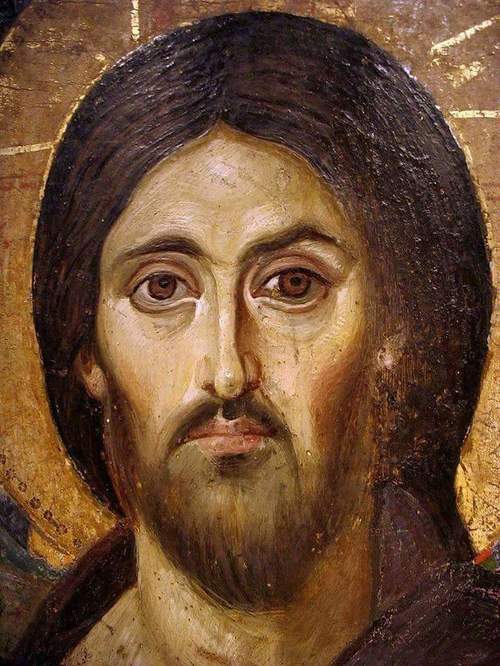
Which brings us to the importance of icons in the Orthodox Christian Church. Icons depict a face, a prosopon, they have eyes - the windows of relationship. We looked at them and refer to the original. We look at the icon of Christ and it helps us speak to him, relate to him, pray to him.
And because of their function of being such an epitomy of the big ‘T’ - tradition of our faith, we proudly conduct an icon procession on the first Sunday of Lent every year.
I will therefore ask you to join the procession. We will be lead by the altar boys, then the children of the Sunday School, then the choir, then myself and you the congregation will follow around the perimeter of the church and back in to the church to triumphantly close the service.
Thank you.
Which brings us to the distinction between truth with a little ‘t’ and Truth with a big ‘T’. The little ‘t’ truths have to do with all the different the parts of the picture, the big ‘T’ Truth has to do with the whole picture. The little ‘t’ truths have to do with scientific facts and knowledge, the what? and how?, the big ‘T’ Truth has to do with the wisdom of the why? and who?. The little ‘t’ truths have to do with the seeking and the journey, the big ‘T’ Truth has to do with the finding and the destination.
One of the basic quests for all people in life is to find the truth. As children, some of us would take apart our toys to see how they worked. One of the first nagging questions we ask as children is “Why?” Why this, why that? But all the answers we got in our upbringing and schooling and education were answering the question of how? and what? That’s why we kept going with “why?”, “why?” “but, why?” So it is that all of us have learnt to answer the ‘why’s’ with the ‘how’s’. We continue to take apart everything with microscopes and telescopes. We analyse everything. We remain focused on the question of how? and what? The little ‘t’s.
That is why most of us learnt to ignore the bigger questions, the bigger ‘T’s. “Why am I here?”, “Who am I?” “Where am I going?” “What is my purpose in life?”. This explains why religion has not become extinct despite all the science and information and communication of the modern world. Monolithic Science chooses to side-step the big “why’s?” And by the same token, monolithic religion chooses to side-step the “how’s”.
As far as we are concerned, we Orthodox Christians who have inherited the Greek tradition, do not pit the two approaches against each other. It is not Science versus Religion, it is Science and Religion. One is interested in the little ‘t’s the other is interested in the big ‘T’. Respecting and engaging with both is the wise thing to do. It is when we choose one over the other that we become vicious and nasty. Atheists and amoralists on the one side and fundamentalists and fanatics on the other.
An example of a person whose quest for truth led him to the big ‘T’ was Justin the Philosopher. Born into a pagan family around 100AD, he grew up to study all the philosophies of the day, the Stoics, the Peripatetics, the Pythagoreans, the Platonists. In each of them he found bits of satisfaction, but not the inner satisfaction of the ultimate answer to life. One day, he met and had a discussion with a Christian. He was interested and began to read some of the Scriptures of the Christians. He would have read the passage where Jesus Christ said: “I am the Way, the Truth and the Life.” Here was someone saying he was the Truth. Someone, not something. A person. Not the “how?”, not the “what?” but a “who?”, a person. And person supposes relationship; and relationship supposes love; and love leads to communion with the divine; and communion with the divine is... the meaning and the purpose.
Justin, the philosopher embraced Christ and became a Christian. He went on to compose famous writings where he expounds on the biblical concept of Christ as Logos of God, as the Word of God, as the Logic of God. That non- Christians such as the ancient Greek philosophers have traces of ‘spermatikos logos’, seeds of the ultimate Logos, partial truth, fragments and insights into God, but that the fullness of the Truth is Christ.
Many modern intellectuals, tell us that the search for truth is an open-ended process with no possibility of ever really achieving it. No, Jesus Christ says something very different. That finding the truth is a possibility. He said: “And you shall know the truth, and the truth shall make you free.” (John 8:32) Yes, it was not a rock band or a modern intellectual who said this famous phrase..., it was Jesus Christ, two thousand years ago. “The truth shall make you free.” “Η αλήθεια ελευθερώσει υμάς.”
Now lets compare truth and falsehood. There is an old story in the odes of Horatio. It tells of two women that went swimming at a pond. One was called Veritas and the other was called Falsitatis. Truth and Falsehood. After swimming a little bit, Falsehood got out of the pond, grabbed the clothes of Truth and ran off, leaving behind her clothes. Truth got out of the water and preferred to go back home naked rather than appear in the the clothes of Falsehood. This is how the phrase “naked truth” originated. Truth refuses to present itself with lies, but falsehood never hesitates to disguise itself with bits of truth.
What are some of the disguises that falsehood wears in order to appear as truth?
Disguise number one: popular opinion... just because so many people hold an opinion, does not necessarily mean that it is right.
Disguise number two: fashion and fads... just because so many people do something, does not necessarily mean that it is right.
Disguise number three: legalism... just because the first two disguises may become scripted into law, does not necessarily mean that it is right.
These disguises are evident in the events leading up to the crucifixion of Jesus. When the governor Pontius Pilatus had to decide if he were to execute an innocent person, Jesus Christ, he knew that there was no crime. He asked Jesus, “Are you a king?” and after saying that his kingdom is not of this world, Jesus said, “You say correctly that I am a king. For this I have been born, and for this I have come into the world, to testify to the truth. Everyone who is of the truth hears my voice.” And the governor dismissively said “What is truth?”.
In other words, he didn’t care. Truth? Too hard. There is a mob out there wanting you dead (popular opinion); its according to their rules (legalism); petty criminals get executed all the time (fashion). I need to settle this down and get back to my collection of dues, and my banqueting. Eat, drink and be merry.
And so it was, that the Truth was handed over to be silenced.
Brothers and sisters, we, all people, look far and wide for the Truth. We think it is something complicated, elusive and hard to find. But all the time Truth is so near and so uncomplicated. It is not something... it is someone. Someone we can love and relate to and connect with and commune in. The divine personhood of Christ-God.
[Appended on Icon Procession day - Sunday of Orthodoxy:
Which brings us to the importance of icons in the Orthodox Christian Church. Icons depict a face, a prosopon, they have eyes - the windows of relationship. We looked at them and refer to the original. We look at the icon of Christ and it helps us speak to him, relate to him, pray to him.
And because of their function of being such an epitomy of the big ‘T’ - tradition of our faith, we proudly conduct an icon procession on the first Sunday of Lent every year.
I will therefore ask you to join the procession. We will be lead by the altar boys, then the children of the Sunday School, then the choir, then myself and you the congregation will follow around the perimeter of the church and back in to the church to triumphantly close the service.
Thank you.